

Table of Contents
Preparation Room
The preparation room is vital as it serves as the foundation for all experimental work in a microbiology laboratory. It is where lab personnel prepare culture media, sterilize equipment, clean glassware, and store chemicals and reagents, ensuring everything is ready and contamination-free for experiments.
Essential lab furniture:
- Chemical-resistant workbenches for media preparation
- Stainless steel sinks with hot and cold water for cleaning
- Locked storage cabinets for chemicals and glassware
- Integrated autoclaves for sterilization (with proper ventilation)
- Drying ovens for sterilizing glassware
- Open shelving or counter space for organizing materials
Aseptic Room (Cleanroom)
The aseptic room is essential for maintaining a sterile environment during sensitive microbiological procedures like cell culture, bacterial isolation, and sterile sample handling. It prevents contamination, ensuring the integrity of experimental results.
Essential lab furniture:
- Laminar flow hoods or clean benches for sterile workspaces
- Storage cabinets for sterile supplies (e.g., pipettes, plates)
- Pass-through windows or boxes for material transfer
- Non-porous, easy-to-clean work bench (e.g., stainless steel)
- Integrated air filtration systems (HEPA filters)
Incubation Room
The incubation room is necessary to provide controlled conditions for microbial growth, such as specific temperatures and humidity levels. It ensures bacteria, fungi, and other microorganisms thrive optimally for research and testing purposes.
Essential lab furniture:
- Racks or shelving to hold incubators
- Workbenches for preparing and monitoring cultures
- Integrated environmental control systems for temperature/humidity
- Adequate electrical outlets and ventilation for equipment
- Space for specialized incubators (e.g., CO₂ or anaerobic)
Microbial Testing Room
The microbial testing room is critical for analyzing cultured samples and obtaining accurate experimental data. It supports procedures like microbial identification and growth measurement using specialized instruments.
Essential lab furniture:
- Instrument-specific workbenches (e.g., anti-vibration tables)
- Storage cabinets for reagents and samples
- Fume hoods or biosafety cabinets for hazardous materials
- Ergonomic seating for prolonged tasks (e.g., microscopy)
- Adequate lighting and power supplies for equipment
Waste Disposal Room
The waste disposal room is crucial for safely managing and disposing of biohazardous, chemical, and other lab waste. It ensures compliance with safety regulations and protects lab personnel and the environment.
Essential lab furniture:
- Specialized waste containers (e.g., autoclavable bins)
- Integrated autoclaves or neutralization systems for treatment
- Ventilation systems to remove hazardous fumes
- Storage areas for waste segregation
- Easy-to-clean surfaces and floors
Changing Room and Office Area
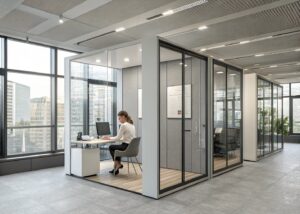
The changing room and office area are essential to support lab operations. The changing room prevents contamination by providing a space for staff to change into protective gear, while the office area facilitates administrative tasks and data management.
Essential lab furniture:
- Lockers for personal belongings and lab coats
- Benches and mirrors for changing
- Hand-washing sinks with antimicrobial soap
- Desks, chairs, and computers for office work
- Filing cabinets or shelves for document storage