 跳到内容
跳到内容 


Table of Contents
Introduction: Why Cleanroom Contamination Control Matters
Imagine a single dust particle ruining a batch of life-saving drugs or halting a cutting-edge semiconductor production line. In industries like pharmaceuticals, semiconductors, biotechnology, aerospace, and medical device manufacturing, cleanrooms are the backbone of quality and safety. But here’s the catch: even the most advanced cleanroom is useless without proper contamination control.
Contamination isn’t just a minor inconvenience—it can lead to product failures, costly recalls, and even regulatory penalties. Whether you’re designing a new cleanroom or a contractor ensuring its success, you need a systematic approach to keep contaminants at bay. This guide breaks down the four essential principles of cleanroom contamination control, giving you practical strategies to protect your facility and meet strict industry standards.
Understanding Contamination Sources
To fight contamination, you first need to know your enemy. Contaminants come from two main places: outside the cleanroom (external) and inside the cleanroom (internal). Let’s explore both.

External Contamination Sources
These invaders sneak in from the outside world:
- Airborne Infiltration: Unfiltered HVAC air, cracks in walls, or frequent door openings.
- Material-Based Contamination: Dirty construction materials, personnel clothing, or tools brought from uncontrolled areas.
A tiny gap or a careless entry can flood your cleanroom with dust, microbes, or chemical vapors, threatening its classification.
Internal Contamination Sources
Once your cleanroom is running, daily operations can create their own mess:
- Human Sources: Skin flakes, hair, or particles stirred up by movement.
- Equipment and Processes: Wear from machines, friction, or byproducts from manufacturing.
Without control, these internal culprits can quickly undo your cleanroom’s purity.
The Four Pillars of Cleanroom Contamination Control
To keep your cleanroom spotless, you need a plan built on four key principles. Each one tackles a different contamination challenge, creating a bulletproof system.
Prevent External Contaminants from Entering
Your cleanroom’s first job is to block outside threats. Here’s how to do it:
Positive Pressurization
Keep air flowing out by maintaining a 10-15 Pa pressure difference between the cleanroom and outside areas. Use alarms to catch any pressure drops.
Airtight Construction
Seal every joint, crack, and penetration with cleanroom-grade materials. Test for leaks with smoke and fix them fast.
Entry Protocols
Set up airlocks or anterooms for people and materials. Require full gowning and use air showers or tacky mats to trap contaminants.
Top-Notch Filtration
Install HEPA or ULPA filters matched to your cleanroom’s class. Test them regularly to ensure they’re catching everything.
Quick Tip: Think of your cleanroom as a castle—every unsealed gap is a weak spot in your wall.
Control Internal Particle Generation
Even a sealed cleanroom can get dirty from the inside. Here’s how to keep it in check:
- Choose the Right Materials
Use non-shedding, cleanroom-safe materials for walls, floors, and furniture. Skip anything that breaks down under cleaning.
- Manage Equipment
Pick cleanroom-designed machines and maintain them to avoid particle shedding. Add vibration dampers to moving parts.
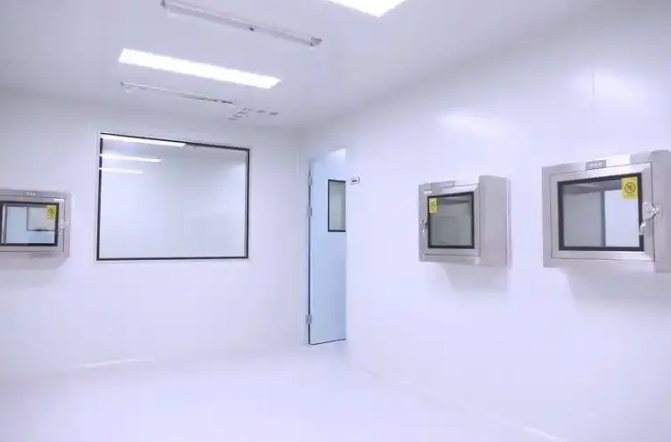
Picture Remarks: cleanroom with stainless steel pass box.
- Train Personnel
Teach staff to move carefully and wear proper gear. Set rules to cut down on air turbulence and shedding.
- Certified Supplies
Only use supplies tested for cleanroom use. Store them properly to keep them clean before they enter.
Quick Tip: Everyone and everything inside is a potential dust factory—control them like your success depends on it.
Prevent Particle Accumulation
Particles that settle can stick around and cause trouble later. Stop them with these steps:
- Design for Easy Cleaning
Build smooth, seamless surfaces with no nooks or crannies. Use materials that can handle tough cleaning agents.
- Set Cleaning Schedules
Create detailed plans for daily and weekly cleaning. Train staff to use the right tools and techniques.
- Smart Layout
Keep equipment spaced out for cleaning access. Plan workflows to avoid spreading dirt.
- Check Surfaces
Test surfaces regularly for particles. Act fast if levels get too high.
Quick Tip: A dirty surface is a time bomb—clean it before it explodes into your air.
Remove Airborne Particles Rapidly
Some particles will float around no matter what. Get rid of them fast:
- Boost Air Exchange
Match air changes per hour to your cleanroom class. Make sure your HVAC can handle busy days.
- Fix Dead Zones
Use airflow tests to find spots where air stalls. Adjust vents to keep it moving.
- Control Airflow
Set up unidirectional flow in key areas. Direct air to push contaminants out, not toward your work.
- Monitor in Real Time
Install particle counters and set alerts for spikes. Use data to spot problems early.
Quick Tip: Airflow is your cleanroom’s broom—make it sweep efficiently.
Building a Contamination Control Culture
Great systems need great people. Here’s how to make contamination control second nature:
- Train Everyone
Offer regular training on cleanroom rules and contamination risks. Test staff to keep them sharp.
- Keep Improving
Review your methods often. Learn from mistakes and update your plans.
- Document Everything
Track all cleaning, maintenance, and incidents. Be ready for audits with solid records.
Quick Tip: A cleanroom thrives when everyone owns the fight against contamination.
Conclusion: Your Path to a Spotless Cleanroom
Contamination control isn’t a one-and-done task—it’s a daily mission. By mastering these four principles—blocking external contaminants, taming internal sources, stopping accumulation, and clearing the air—you’ll build a cleanroom that stands up to the toughest standards.
For pharmaceuticals, semiconductors, or any high-stakes industry, these steps are your roadmap to quality and compliance. Start now: audit your plans, tighten your defenses, and commit to constant vigilance. Your cleanroom’s success depends on it.

